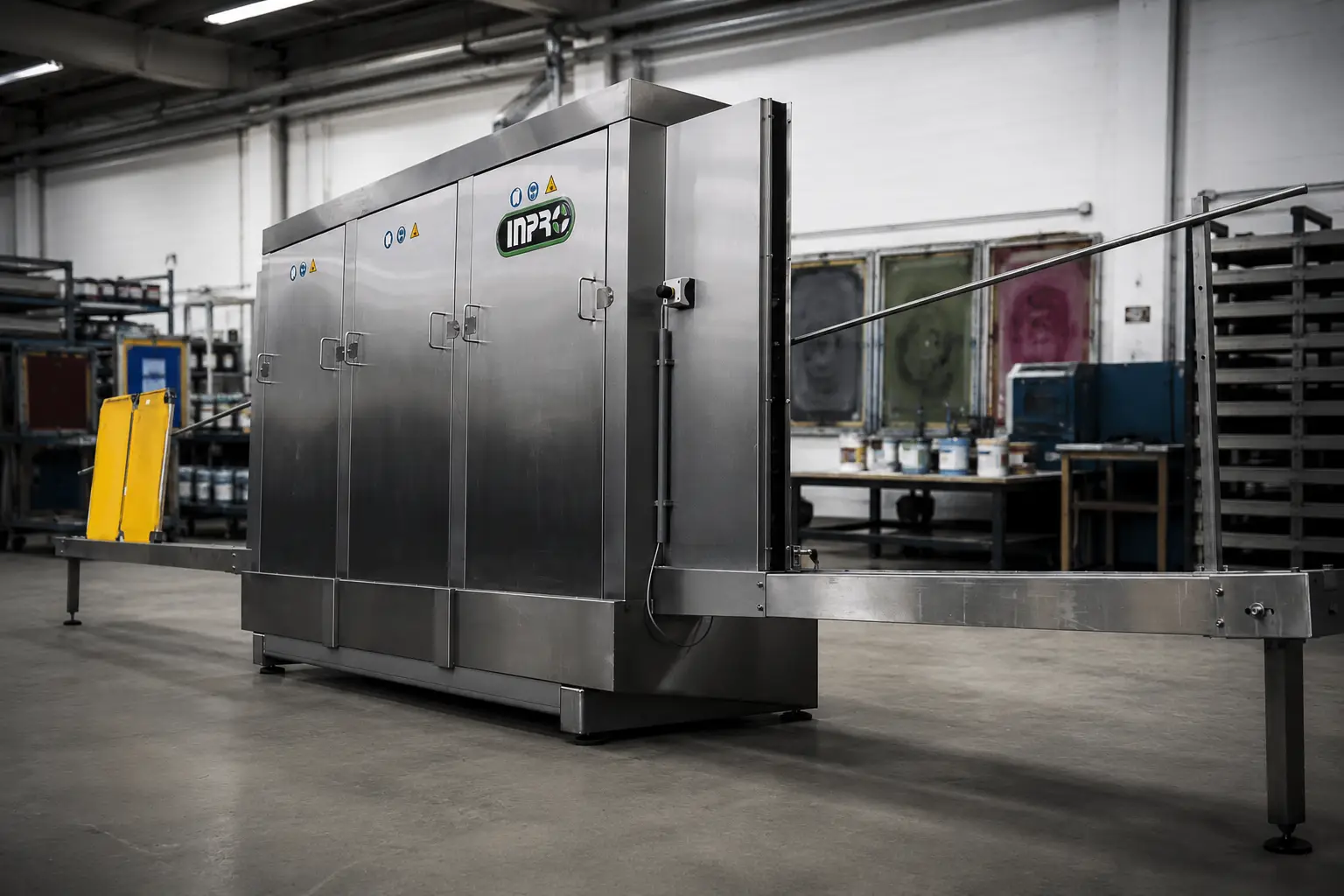
Screen printing is a craft that has evolved over the years into a highly technological, industrial process. While automatic carousels and Computer-to-Screen (CTS) systems have drastically increased production speed on the shop floor, one department in many printing companies remains hopelessly behind: the washhouse or reclaim room. Cleaning or ‘reclaiming’ screen printing frames is traditionally the most undesirable, time-consuming, and chemically dangerous process within any screen printing facility. But it no longer has to be that way. The introduction of the INPRO Tigerclean TC120-3 heralds an entirely new era. As the fourth generation of in-line reclaiming automation, this machine promises not only to maximize efficiency but also to radically transform working conditions and environmental sustainability. In this comprehensive article, we dive deep into the technology, the operational advantages, and the Return on Investment (ROI) of this groundbreaking equipment.
The Hidden Costs of Manual Reclaiming
Before we discuss the advanced technology behind the Tigerclean TC120-3, it is crucial to understand why automating the washing process is so vitally important. Manual reclaiming involves numerous hidden costs and massive drawbacks that put immense pressure on the profitability of a printing business.
First and foremost is the factor of labor. Manually degreasing, de-coating, and washing screens is incredibly labor-intensive. Often, this grueling work is left to entry-level employees, which inevitably leads to a high staff turnover rate due to the unpleasant working conditions: constant exposure to cold water, toxic chemical fumes, and heavy physical strain. Training new personnel not only costs valuable time but also causes frustrating delays in the overall production workflow.
Furthermore, there is the undeniable inconsistency in quality. An employee who just starts their shift will likely pay far more attention to meticulous cleaning than they would at the end of a long, exhausting day. This varying quality leads to ‘pinholes’ in newly coated screens, poor adhesion of fresh emulsions, and ultimately to breakdowns and costly downtime of the printing presses. Every single screen that has to be recoated and exposed again because it wasn’t cleaned properly costs not just raw material, but mostly extremely expensive production time on the press.
Finally, there are the mounting chemical and water costs. With manual washing, the dosage of expensive chemicals is rarely optimal, leading to immense waste. Additionally, an unnecessary amount of contaminated water flows straight down the drain, resulting in higher environmental levies and a much larger ecological footprint.
Generation upon Generation Improved: What makes the 4th generation unique?
For decades, INPRO has been the undisputed pioneer in the field of screen cleaning technology. The development of the Tigerclean series is the direct result of continuous innovation, years of research, and, most importantly, direct feedback from the global market of textile and industrial printers. The first generations successfully automated the basic tasks, but the TC120-3, the latest 4th generation, elevates everything to an absolute top level. The machine integrates highly advanced sensor technology, robust drive systems, improved filtration systems, and an unparalleled reliability that is strictly necessary in 24/7 production environments.
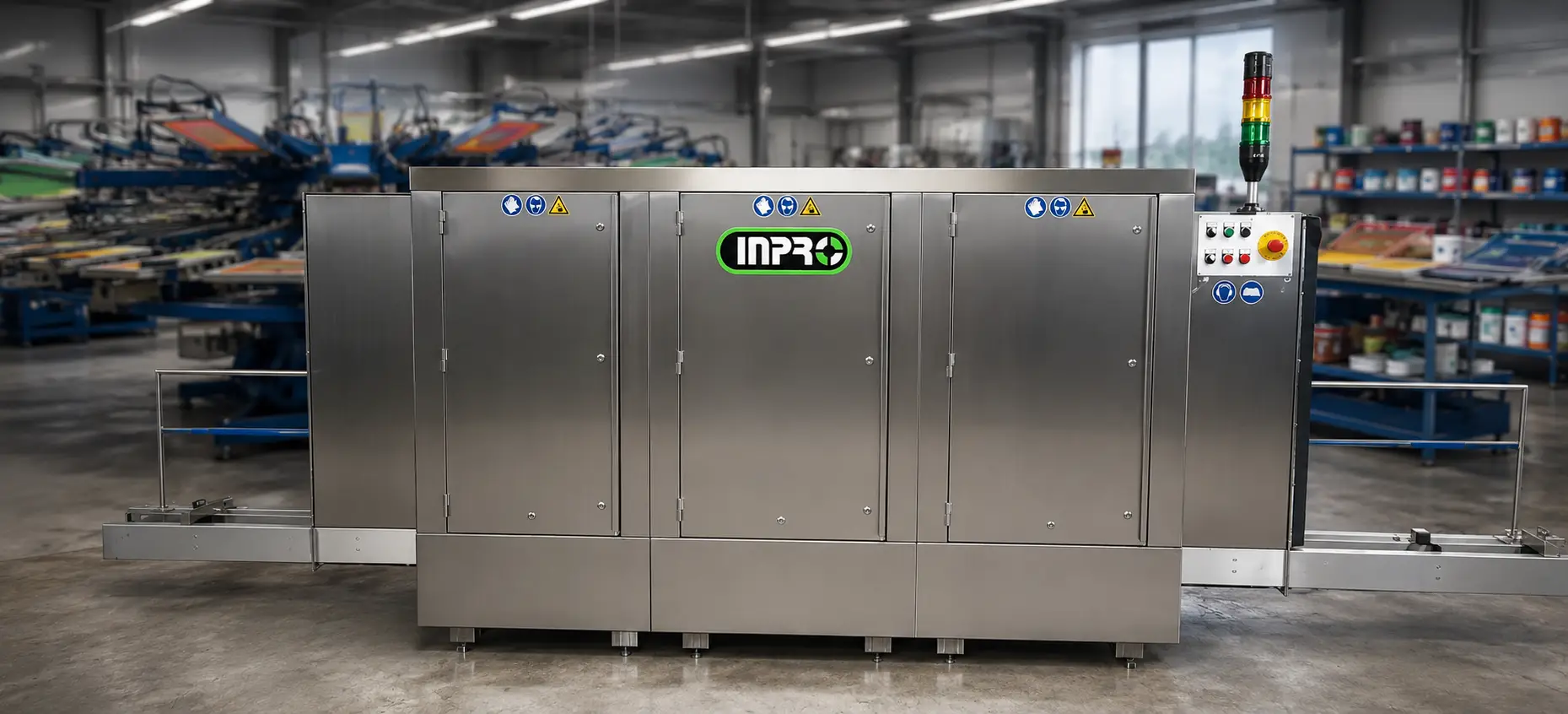
What makes the TC120-3 remarkably unique is its modular and completely closed in-line design. The machine is heavily built using robust, high-quality stainless steel components that effortlessly withstand the harsh and corrosive conditions of an aggressive reclaiming department. Thanks to smart, industrial PLC controls and intuitive touch-screen interfaces, operators can select programs at the simple push of a button—programs perfectly tailored to specific ink types (such as plastisol, water-based, discharge, or aggressive UV solvents) and various mesh types. The 4th generation is also characterized by a significantly reduced energy consumption and a noticeably quieter operation, which contributes enormously to a more pleasant and highly productive work environment.
The Step-by-Step Process in the Tigerclean TC120-3
The true immense power of the INPRO Tigerclean TC120-3 lies in the smooth, seamless integration of all complex reclaiming steps into one automated, uninterrupted line. Let’s walk through this impressive process step by step in detail:
1. Infeed and Ink Removal
The operator places the heavily soiled screen, straight from the printing press, onto the automatic infeed conveyor belt. It is often recommended to remove the worst ink residue beforehand with a spatula or card, but the machine is built to take over the heavy lifting. In the first enclosed module, an environmentally friendly, non-volatile ink remover (ink degradant) is applied via highly precise nozzles. Special rotating brushes and optimized sprayers ensure that the chemistry penetrates deep into the mesh to break down the ink structure. Because this is a 100% closed system, extremely powerful solvents can be safely and effectively used without dangerous and unhealthy fumes (VOCs) escaping into the workspace.
2. De-coating (Emulsion Removal)
As soon as the ink is fully dissolved and partially rinsed off, the screen automatically moves forward to the critical de-coating section. Here, a specially formulated, highly concentrated stripper is evenly sprayed over the mesh. This chemical rapidly breaks down the photopolymer or diazo emulsion. The TC120-3 utilizes perfectly calibrated pump and spray dosing, ensuring that expensive chemistry is never wasted, nor is too little ever applied. This consistently accurate process guarantees that the hardened emulsion is entirely soaked off without any risk whatsoever of damaging the precious mesh.
3. High & Low Pressure Washing
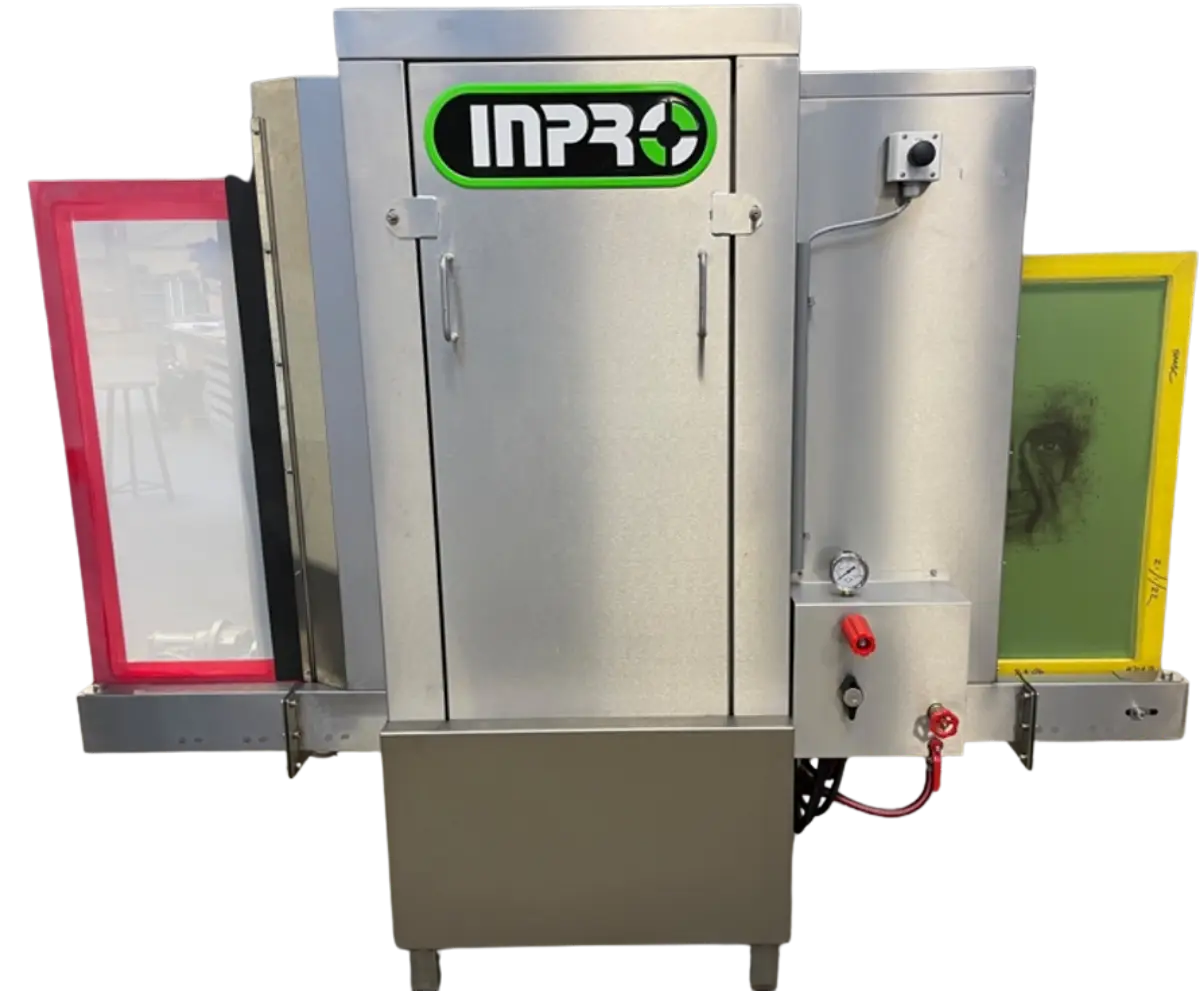
This is the stage where the globally patented INPRO 2-sided nozzle system truly shines. After the chemicals have done their work, both the remaining ink and all dissolved emulsion residues must be blasted away with brute force. The machine uses an ingenious combination of a low-pressure rinse (to wash away coarse dirt and excess chemistry), immediately followed by a pulsating high-pressure jet (often set up to 100 bar or more) that hits the mesh from both sides simultaneously, and in perfect harmony. This intersecting spray pattern is absolutely crucial: it ensures that even the tiniest dirt particles are eliminated from the hidden corners of the aluminum frame and the extremely fine woven mesh. This specific process effectively prevents the dreaded ‘ghosting’ images and drastically extends the overall lifespan of your screen frames.
4. Degreasing
A step that is very often completely forgotten or executed extremely sloppily during manual labor is the thorough degreasing of the screen. Even a minuscule, microscopic layer of skin grease, dust, or chemical residue can prevent a new emulsion layer from adhering perfectly, leading to catastrophic consequences during exposure or on-press printing. The Tigerclean treats the screen fully automatically with a high-quality degreaser and then carefully rinses it with crystal-clear water, ensuring the mesh achieves the absolute perfect surface tension for a flawless new coating.
5. Drying and Outfeed
In the very last phase, the wet, perfectly clean screen slowly passes through an integrated drying cabin equipped with highly powerful, aerodynamic air knives. The water is literally blasted off the mesh and the frame with enormous precision and sheer force, completely without using energy-consuming and slow heating elements. When the screen exits the machine at the end of the conveyor belt, it is immediately dry to the touch and totally ready to be moved straight to the coating department. This completely eliminates the need for large, dust-sensitive, and space-consuming drying cabinets where screens previously had to hang for hours, thereby reducing the turnaround time gigantically.
Safety, Health, and Environment (HSE)
In the modern, responsible graphic arts industry, occupational health, workplace safety, and environmental protection (HSE) are no longer afterthoughts, but are central to corporate strategy. The INPRO Tigerclean TC120-3 was designed from the drawing board with these strict principles in mind. Because the entire wash process takes place within a robust, completely enclosed stainless-steel tunnel, your machine operators are no longer exposed to the suffocating mist of aggressive chemicals, harmful aerosols from high-pressure cleaners, or dangerous volatile organic compounds (VOCs). This directly results in significantly lower absenteeism, fewer health complaints, and a much safer, healthier, and generally more pleasant working environment.
Additionally, the machine is equipped with exceptionally advanced recirculation and filtration systems. The costly ink removers and de-coating fluids are efficiently collected, routed through multiple filtration systems to separate solid particles (such as tough, cured emulsion, lint, and thick pigments), and are then reused time and time again in subsequent wash cycles. This smart system often reduces overall chemical consumption by a staggering 50% to 70% in direct comparison to wasteful manual washing. Likewise, the massive water consumption associated with traditional wash cabins is drastically curtailed through the ingenious, tiered reuse of rinse water in the initial coarse washing steps. All this not only makes the print shop much more profitable but also effortlessly helps in complying with the strictest environmental regulations.
Return on Investment (ROI) and Economic Benefits
The initial acquisition of a heavy industrial in-line system like the INPRO Tigerclean TC120-3 logically requires a substantial capital investment. However, when we deeply analyze the ‘Total Cost of Ownership’ and the astonishingly short Return on Investment (ROI), the true profound value becomes immediately apparent. Let’s look at a representative calculation example for a medium-to-large print shop processing about 500 screens per week.
In the traditional, fully manual washing process, an average screen takes roughly 10 to 15 minutes of uninterrupted labor time (this includes scraping away thick ink, applying emulsion remover, spraying for minutes, scrubbing, degreasing, and carefully placing it into the drying cabinet). For 500 screens, this equates to well over 100 hours per week of heavy manual labor, or effectively 2.5 full-time equivalents (FTE) standing exclusively in a wet, hazardous room. With the implementation of the automated Tigerclean TC120-3, only one single operator needs to ergonomically load the machine and unload the dry screens at the far end. The actual machine cycle time, depending entirely on the chosen wash program and the exact frame size, is an impressive 2 to 3 minutes per screen. During this fully automated process, the operator can easily perform other crucial prepress tasks, such as coating the freshly cleaned screens. This directly and structurally saves a company 1.5 to 2 FTE on their monthly payroll.
Add to these substantial labor savings the drastic drop in chemical purchasing costs, the sharply lower waste disposal fees, and the huge reduction in the water utility bill. But pay close attention: the absolute largest, often invisible savings and profit generator lies hidden in the maximized uptime of your very expensive automatic printing presses. If, strictly due to using perfectly, microscopically cleaned screens, the press time on the production floor increases by a mere 5%—because press operators no longer have to pause production to tape off pinholes or because screens simply don’t tear unexpectedly due to residual dirt—then this machine often fully pays for itself within a fabulous one to one-and-a-half years.
Best Practices for Optimal Use
To achieve the maximum return, the highest reliability, and the longest possible lifespan from the INPRO Tigerclean TC120-3 over many years, industrial experts strongly advise strictly adhering to the following best practices:
- Remove Excess Ink (Carding): Although the machine’s powerful brushes and jets are perfectly capable of handling thick layers of ink, scraping away the largest blobs of ink beforehand with a plastic spatula or card is essential. This prevents unnecessary heavy strain on the internal filtration system, keeps your expensive wash fluids pure for much longer, and significantly extends the life of the pumps.
- Structured, Preventive Maintenance of Filters: Periodically inspecting, cleaning, or completely replacing the coarse and fine internal filters is of the utmost importance. A clogged filter system immediately reduces the crucial water and chemical pressure at the nozzles and disrupts the effectiveness of the chemical recirculation, ultimately leading to poorly washed screens.
- Choose Only the Right Chemicals: Use only high-quality, certified chemicals that are explicitly approved or recommended by the machine manufacturer INPRO. The use of cheap, highly inappropriate, or extremely aggressive alternative solvents can irreversibly damage or dissolve the internal plastic hoses, vulnerable seals (rubbers/O-rings), and highly sensitive electronic sensors within the machine.
- Optimize Belt Speed per Task: Always smartly adjust the speed of the conveyor belt to the specific degree of soiling of the current batch. Give older, days-old dried-in and notoriously stubborn emulsions the chance to soak properly by simply running the machine slightly slower, resulting in the best possible de-coating outcome without ever needing manual post-treatment.
Integration in an Advanced, Modern Screen Printing Facility
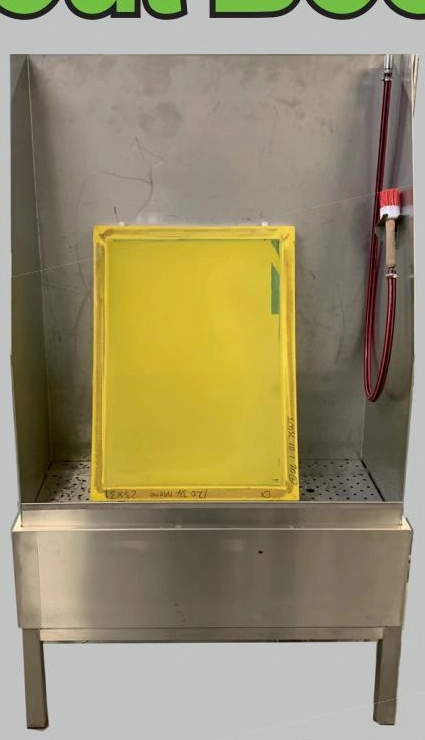
The INPRO Tigerclean is much more than just a big washing machine; it acts as the missing, perfect bridge between the messy reclaim room and the rest of a modern, digitally automated prepress department. In intelligent combination with a fully automatic screen coating machine and a high-end CTS (Computer-to-Screen) imaging unit, a smooth, seamless, and extremely predictable production flow is created for the very first time. An ink-smeared screen comes straight off the printing press, effortlessly passes through the Tigerclean tunnel, emerges completely tight and bone dry, is immediately placed on the automatic coater without any waiting time, is then perfectly exposed by the CTS laser or LED unit, and is ready to be mounted back on the press within a very short timeframe. This modern “Lean Manufacturing” approach drastically minimizes the necessary and expensive inventory of aluminum screen frames within your company. Because the screens rotate through the production loop significantly faster, an efficient print shop simply needs far fewer frames and much less storage space to generate exactly the same, or even a much higher, daily output.
Conclusion
For professional industrial screen printers, large textile printers, and packaging printers who ambitiously strive for maximum daily efficiency, unparalleled and highly consistent quality, and a deeply safe and responsible working environment for their valuable staff, continuing to manually clean screen frames is simply no longer an economically or ethically viable option in this modern era. The INPRO Tigerclean TC120-3, fully armed with its highly developed, extremely robust 4th generation in-line cleaning technology, undeniably offers the ultimate total solution available on the market today. The system rigorously automates the absolute dirtiest, most complex, and dangerous part of the entire prepress process, it drastically lowers your daily operational costs, and it empowers you as a business owner to fully control and safely maximize your entire production capacity. A well-considered investment in the Tigerclean is therefore much more than merely an investment in heavy steel and engineering; it is a direct, powerful investment in the well-being and long-term health of your employees, forming the indispensable backbone for the highly profitable, future-proof success of your graphic enterprise.
Want to learn more about these screen printing solutions?
Explore the technical specifications of INPRO Combi-Compact and INPRO or contact the specialists at Dimix.Screen for tailored advice or a live demonstration.
Featured & related machines
Discover the industrial systems and solutions related to this topic:
INPRO 120-3 (Tigerclean TC120-3)
4th generation fully automatic in-line reclaiming system, profitable from 10 to 20 screens/day up to 300+ screens/day (stackable for double capacity).
ROQ FOLD & PACK / Folding & Packaging Machines
Fully automated garment folding, bagging, sealing, and labeling lines (ROQ FOLD, ROQ PACK, ROQ OUT & ROQ LABEL) for screen printers and fulfillment centers.
ROQ Sahara
High-efficiency industrial conveyor drying tunnel operating on gas, electricity, or dual MIX energy.