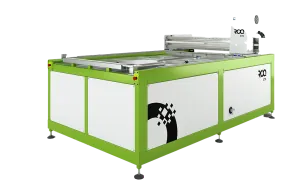
The prepress department, commonly referred to as the screen room, has historically been one of the most chemically intensive and environmentally burdensome areas within a screen printing facility. The repeated printing of plastic film positives, developing with aggressive chemicals, and washing out emulsion residue creates a constant and significant stream of chemical wastewater and plastic waste. Since sustainability has become an absolute top priority in the modern textile and graphic arts industries, progressive printing companies are looking critically at their prepress workflows. The ROQ Computer-to-Screen (CTS) exposure system offers the ultimate solution to not only digitize this department but to make it profoundly sustainable.
The Invisible Environmental Impact of Traditional Screen Making
In the conventional method of screen preparation, a transparent plastic film (the film positive) must be printed on an inkjet plotter or imagesetter for every design to be printed, and for every color within that design. These films are predominantly made of polyester (PET). Although PET is theoretically recyclable, the heavy ink layers and special microporous coatings applied to these prepress films make practical recycling extremely difficult, if not impossible. Week by week, month by month, this leads to a massive, steadily growing mountain of plastic waste ending up in landfills or incinerators.
Additionally, chemically developing and fixing traditional film—depending on the exact technique used—often requires fluids that must be collected separately and disposed of as hazardous chemical waste. Looking at the exposure process itself: traditional metal halide lamps or fluorescent UV tubes consume enormous amounts of electricity and have relatively short lifespans. Furthermore, they contain heavy metals and toxic gases that are harmful to the environment if not processed correctly upon disposal. Applying and washing out the photo-emulsion also involves significant waste in traditional setups, simply because the exposure process is not optimally controlled and uniform.
How the ROQ CTS Eliminates Film Positives for Good
The introduction of Computer-to-Screen (CTS) technology, perfectly embodied by advanced ROQ CTS machines, marks the absolute end of the film positive. The concept is as brilliant as it is simple: the intermediate step of printing onto a plastic film is entirely bypassed. The CTS machine prints the digital design directly from the RIP software onto the emulsion-coated screen mesh.
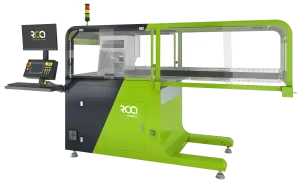
This is achieved using a special, high-density UV-blocking ink or wax. As soon as the image is 'printed' directly onto the emulsion, the machine (or an inline exposure unit) exposes the screen instantly via powerful, energy-efficient UV-LED technology. After exposure, the printed ink or wax can be effortlessly washed away using only standard tap water. The result is a perfectly cured, sharp stencil in your screen, completely ready for production. This innovative process yields spectacular ecological and operational benefits.
Zero Plastic Waste and No Chemical Developers
The most immediate and tangible environmental benefit of a CTS system is waste reduction: zero plastic film literally means zero plastic waste. Just imagine how many hundreds, if not thousands of square meters of polyester film an average screen printing shop consumes and discards annually. With the ROQ CTS, that is a thing of the past. You not only save on the direct purchasing costs of these films and their associated specialized inks or toners, but you drastically shrink the ecological footprint of your business.
Because the image developing process now occurs purely with UV-blocking wax and plain water, toxic film developers and strong chemical cleaners vanish from the screen room. The wastewater generated during the washout of exposed screens is substantially cleaner and contains far fewer harmful compounds. This drastically reduces the burden on your internal water treatment and filtration systems, ensuring much easier compliance with increasingly stringent local environmental and wastewater regulations.
Emulsion Reduction Through Superior UV-LED Curing
Beyond the elimination of plastic films, the type of light source used plays a key role in waste reduction. The ROQ CTS utilizes an advanced UV-LED bar technology for curing (exposing) the photo-emulsion. Unlike traditional lamps that emit light across a broad spectrum including a lot of unnecessary heat (infrared), UV-LEDs emit light in a highly specific, narrow wavelength spectrum precisely tuned to the chemical properties of modern screen printing emulsions (typically around the 395-405 nanometer range).
This targeted, high-intensity energy ensures faster, deeper, and far more uniform curing (cross-linking) of the emulsion. What does this mean in practical terms? Because the emulsion is perfectly cured all the way through, the screen stencil is much stronger and highly wear-resistant during the print run. More importantly for the prepress stage: an optimally cured screen is much easier to wash out. The unexposed areas (the final image) dissolve and wash away faster, yielding razor-sharp edges, while the exposed areas remain rock solid. The phenomenon where half-cured emulsion slowly dissolves into the washout water—leading to 'emulsion scumming' and unnecessarily high volumes of emulsion sludge entering the drain—is practically eliminated.
Water Conservation and Increased Washout Efficiency
The water savings realized with a CTS system are frequently underestimated. Because the curing via UV-LED technology is so powerful and precise, and there is no light scatter creeping underneath a film positive (underexposure is a thing of the past), the washout process proceeds significantly faster. The operator does not need to spray the screen for as long, or with as high water pressure, to obtain a clean, open stencil.
Field tests and customer reports demonstrate that after transitioning to a ROQ CTS system, screen printing shops can save up to 40% on their water consumption in the washout booth. In regions where water is a costly or scarce commodity, or for companies that have defined water conservation as a key performance indicator (KPI) in their Corporate Social Responsibility (CSR) strategy, this represents a massive leap forward.
Perfect Registration and Drastic Setup Time Reduction on Press
Beyond the direct environmental benefits in the prepress department, the efficiency of CTS flows directly onto the production floor. When manually positioning films onto screens, the margin for human error is significant. This results in inaccurate registration, which must then be painstakingly corrected on the screen printing press. Correcting registration costs valuable time, test prints, and... waste (wasted garments, ink, and cleaning solvents for misprinted test items).
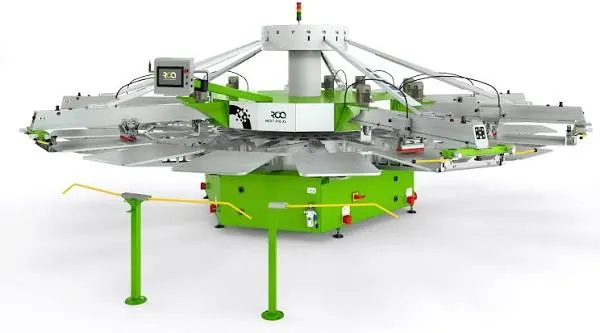
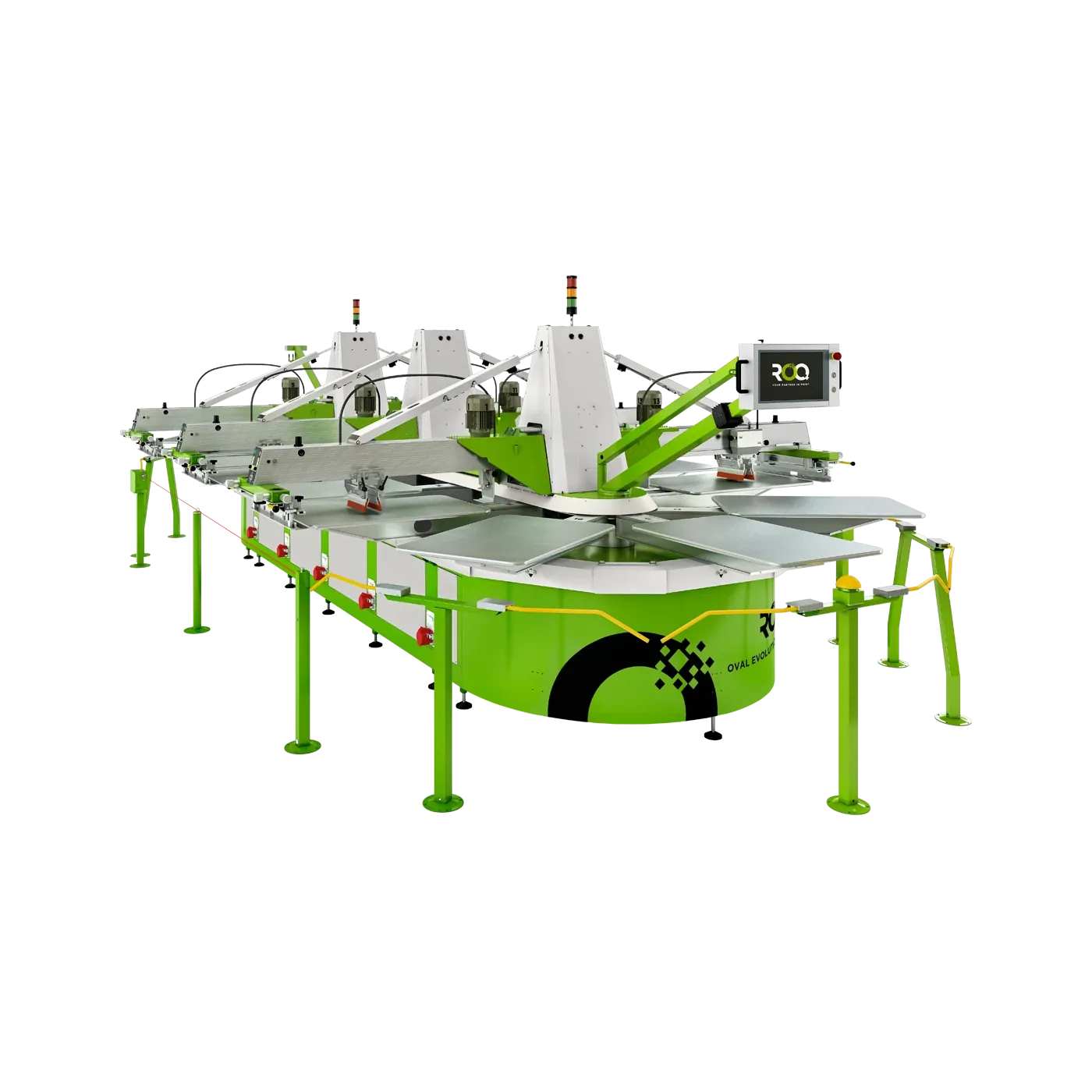
The ROQ CTS, however, operates with a digital registration system (often seamlessly integrated with a 3-point pin-registration system). The machine places the image for each color channel onto the screen at exactly the same coordinates with micrometer precision. When these screens are subsequently mounted onto a modern carousel or oval screen printing press from ROQ, the colors fall almost instantly into perfect registration. The savings on proofing materials (test shirts, pellons, or paper) and the massive reduction in ink waste during press setup contribute substantially to the overall waste reduction of the printing facility.
Health and Safety: A Superior Working Environment
Sustainability is not just about the planet; it is also profoundly about people. Prepress employees traditionally work in dark, damp environments, constantly exposed to strong odors and potentially harmful fumes from chemicals, film developers, and strong solvents used to clean films and the glass plates of conventional exposure units.
By transitioning to CTS exposure, the screen making area transforms into a modern, clean, almost "clean room"-like environment. There are no film chemicals present, there is no large glass plate that requires constant degreasing and cleaning with harsh glass cleaners, and washing out requires much less physical effort. The working environment becomes healthier, safer, and ergonomically superior. This not only boosts employee satisfaction and retention but also mitigates chemical exposure risks and related absenteeism.
The Business Case: ROI and Sustainability Hand in Hand
It is a common misconception that ecological innovations are purely a cost center that only pay off in the distant future. ROQ Computer-to-Screen technology proves the exact opposite. The Return on Investment (ROI) model for a CTS installation is exceptionally robust. Let's summarize the key factors that accelerate the payback period:
- Cost savings on consumables: The complete elimination of purchasing plotter films and the associated expensive specialized inks or toners for inkjet film printers.
- Lower energy costs: UV-LED technology consumes a mere fraction of the electrical energy required by conventional metal halide lamps and requires zero warm-up time.
- Reduced labor in prepress: The process is highly automated. It requires significantly less handling, taping, measuring, and manual quality checks.
- Increased uptime of printing presses: Because the screens are delivered in perfect registration, the presses experience drastically less downtime for setup. This means you can comfortably process more jobs and print more garments per shift.
- Fewer rejects and misprints: The crisp sharpness and durability of CTS-exposed screens lead to superior print quality on the garment, resulting in fewer rejected products and happier customers.
Conclusion
The transition to a ROQ Computer-to-Screen exposure system is one of the most impactful, transformative steps a screen printing company can take on the path to a more environmentally friendly, greener, and simultaneously more profitable production process. You decisively eliminate a persistent stream of plastic and chemical waste, achieve substantial savings on water and energy consumption, and dramatically increase the productivity and throughput of both your prepress department and your press room.
Sustainability in screen printing is no longer a futuristic dream or an empty marketing buzzword; today, it is a highly accessible technological reality. By choosing the ROQ CTS, you are not merely investing in the highest achievable print quality, but you are actively investing in the health and safety of your workforce and the preservation of our planet. Would you like to know exactly what the ROI calculation and the ecological impact would look like for your specific production environment? Contact the technical experts at Dimix.Screen today for a personalized demonstration and a custom workflow analysis.
Want to learn more about these screen printing solutions?
Explore the technical specifications of ROQ CTS and ROQ PRU or contact the specialists at Dimix.Screen for tailored advice or a live demonstration.
Featured & related machines
Discover the industrial systems and solutions related to this topic:
ROQ PRU
Positive Pattern Registration Unit reducing press setup and make-ready times by up to 80%.
ROQ CTS
Direct-to-screen high-resolution UV-LED exposure unit for film-free prepress workflows.
ROQ IMPRESS
Automatic rotary carousel heat press for DTF, vinyl, and screen-printed transfer application.