Automatic Loading and Unloading: The Revolutionary Impact of the ROQ FEED and ROQ PULL in Modern Screen Printing
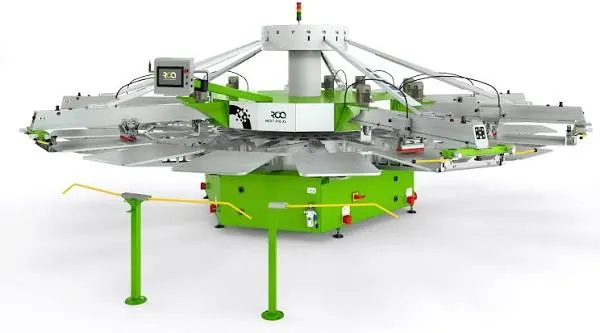
In the dynamic and increasingly competitive world of textile and screen printing, efficiency is no longer a luxury but an absolute necessity. A modern automatic screen printing press, such as the impressive flagship ROQ ECO, possesses formidable mechanical capacity. These advanced machines are designed to effortlessly achieve speeds of up to 1200 rotations per hour. However, when we look at the actual daily production figures of many print shops, we often see that this theoretical top speed is rarely, if ever, sustained throughout a full shift in practice.
The reason for this is surprisingly simple and painfully familiar: the human factor. Physically loading, perfectly centering, and subsequently removing garments without creases at a rate of over 900 to 1200 pieces per hour is physically unsustainable. It takes a heavy toll on operators. Fortunately, technological advancements offer a solution. Through the introduction of advanced robotics, specifically the ROQ FEED and the ROQ PULL, screen printers can automate manual tasks, optimize their workflow, and maximize the output of their expensive presses to previously unimaginable levels.
In this comprehensive article, we dive deep into the challenges of manual handling, the technical superiority of ROQ’s automatic solutions, the return on investment (ROI), and the best practices for transforming your production floor.
The Operator as a Physical and Logistical Bottleneck
To understand the importance of automation, we must first analyze the anatomy of the loading and unloading process. Manually loading a T-shirt onto a pallet (the ‘platen’) might seem like a simple, repetitive task, but it requires a significant degree of concentration and finesse. Each shirt must be exactly centered. Is the neckline just a few millimeters off? Then the entire print will be crooked, and the product gets downgraded to a misprint (reject).
Let’s apply the math to a moderately high speed of 900 pieces per hour. This means that an operator must pick up, position, straighten, and smooth out a completely new garment on the pallet every 4 seconds. Every 4 seconds, without a break. Even for the most experienced and fit operators, this pace is physically impossible to sustain for a full 8-hour shift.
The consequences of this physical strain are multifaceted:
- Speed Loss: As the shift progresses, fatigue sets in. Operators must reduce the press’s speed (increase dwell time) to keep up.
- Quality Loss: Fatigue inevitably leads to a loss of concentration. This results in crookedly loaded shirts, leading to a higher percentage of misprints.
- Ergonomic Risks: Repetitive movements cause RSI (Repetitive Strain Injury), back complaints, and shoulder problems. This leads to higher absenteeism, further straining production capacity.
The Hidden Costs of Manual Handling
The true cost of manual loading and unloading goes far beyond just the operator’s hourly wage. Consider the opportunity cost (lost revenue) of an expensive screen printing press running at 60% of its capacity. A ROQ ECO that prints only 600 shirts per hour instead of 1000 loses the production of 3,200 shirts in an 8-hour shift. Multiply this by your average margin per shirt, and you will see that the costs of inefficiency are astronomically high on an annual basis.
Furthermore, there is the cost of misprints. If a tired operator at the end of the day causes an increase in the reject rate from 1% to 3%, it costs you not only the ink and labor but, more importantly, the purchase value of the ruined textiles.
ROQ FEED: The Intelligent Automatic Loading Arm
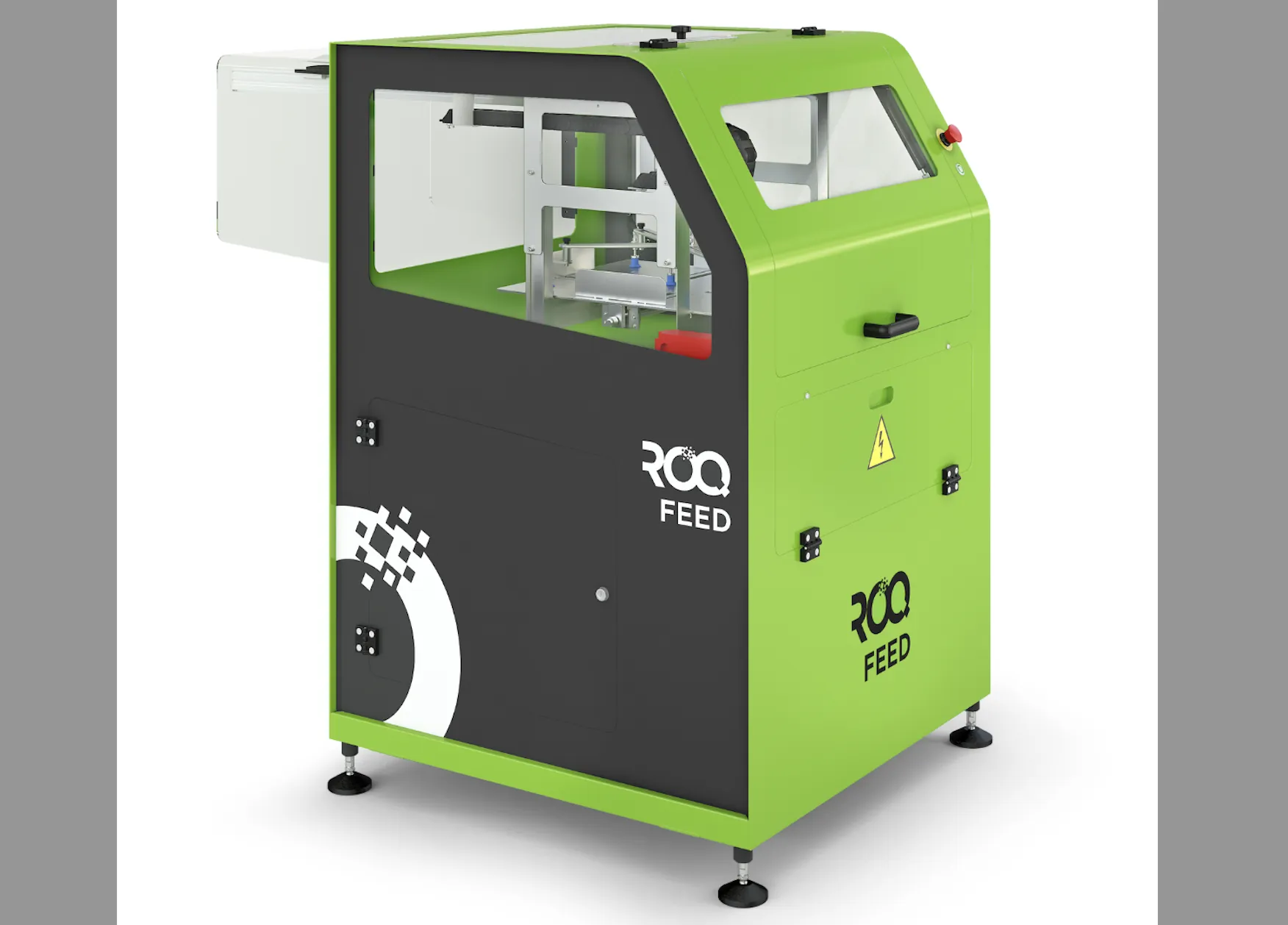
The ROQ FEED was developed as the direct answer to the challenges of manual loading. It is not just a dumb, repetitive gripper arm; it is an advanced, intelligent robotic system designed specifically for the textile industry.
The ROQ FEED is capable of automatically picking up flat textile parts—think panels for cut-and-sew clothing production or specially prepared T-shirts—from a stack or conveyor belt and placing them on the pallets of the screen printing press with microscopic precision.
Technological Superiority and Precision
How does this work in practice? The key to the success of the ROQ FEED lies in its integrated vision and sensor systems. When the robotic arm picks up a piece of fabric, built-in laser sensors check the alignment, the edges, and the position of the textile in real-time. If the textile is not hanging perfectly straight, the system automatically corrects the angle and position before placing the material on the pallet.
This guarantees a 100% flawless loading process. Because the ROQ FEED is not subject to human fatigue, the precision remains exactly the same during the 1st rotation of the day as it does during the 10,000th rotation. The press can run constantly at its maximum mechanical speed, providing an unprecedented boost to daily throughput.
Setup and Integration
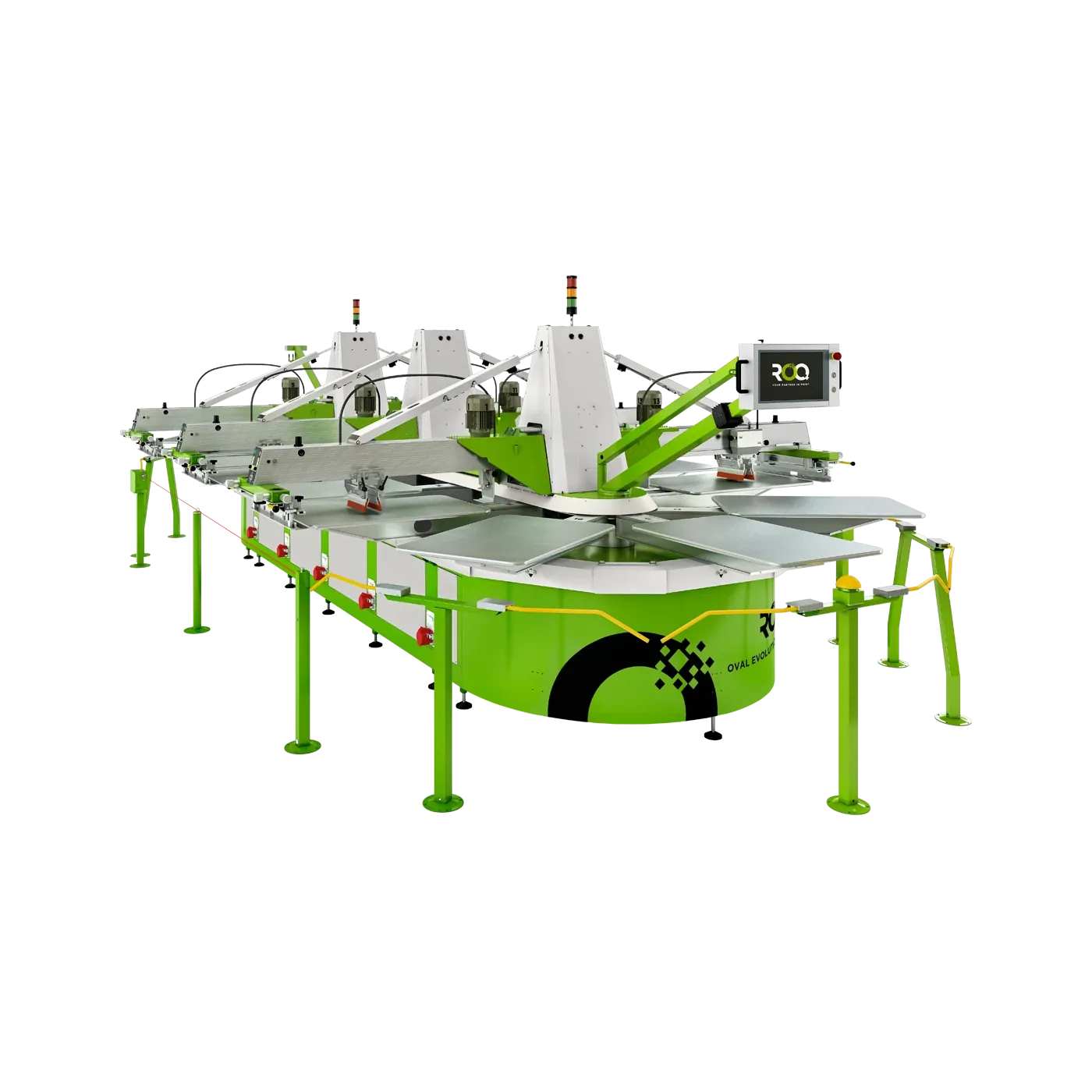
A common concern with automation is setup time. However, the ROQ FEED is designed for seamless integration with the ROQ ecosystem (such as the ROQ OVAL and ROQ ECO). The software communicates directly with the press’s central console. Setting the dimensions of the textile and the positioning is a matter of seconds via the intuitive touchscreen, making the ROQ FEED excellent even for medium-sized print runs.
ROQ PULL: The Gentle Automatic Unloading Arm
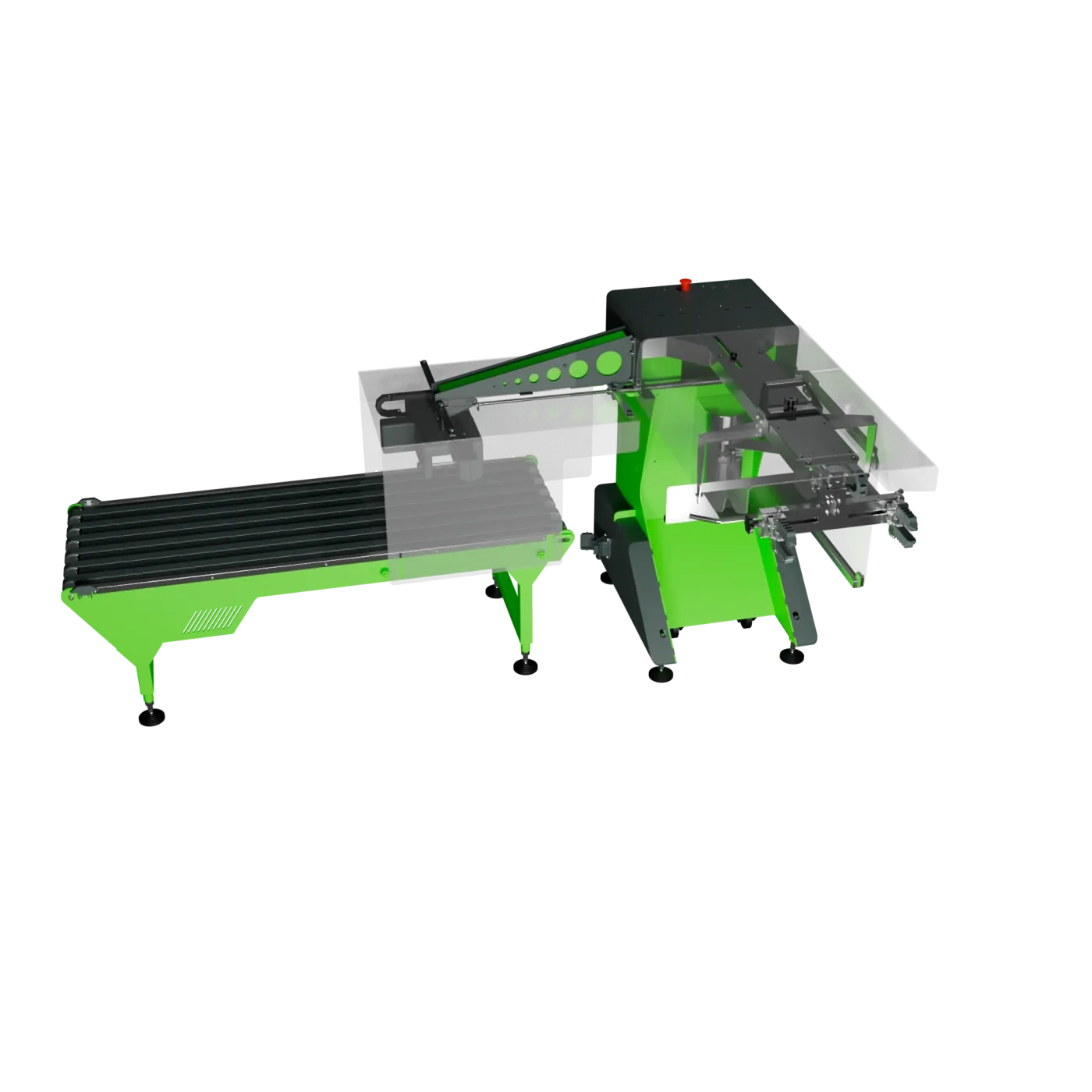
Loading the press is half the battle; unloading is equally crucial. On the take-off side (the exit of the press), the ROQ PULL ensures smooth and uninterrupted handling.
When the freshly printed garment passes the final print head (or flash cure station) and arrives at the unload station, the ROQ PULL goes into action. The robotic arm is equipped with special, textile-friendly grippers. It firmly but gently grabs the garment by the shoulders or corners, lifts it in a controlled manner, and removes it from the adhesive-sprayed pallet.
Protection of Wet Ink and Crease-Free Drying
The biggest technical challenge during unloading is preventing smudging. The ink is wet at this point (especially with water-based and plastisol inks before final curing in the drying tunnel). Manual operators risk touching the wet ink with their fingers or accidentally folding the shirt over.
The ROQ PULL is pre-programmed with a perfectly measured trajectory. It lifts the shirt tight and straight, without allowing the textile to touch the ink layer. The arm then rotates to the drying tunnel’s conveyor belt and lays the shirt down perfectly flat and crease-free. A crease-free position in the drying tunnel (such as the ROQ SAHARA) is essential, as folds in the fabric can lead to uneven curing of the ink and potential wash-fastness issues for the end customer.
Moreover, there’s the issue of heat. After a long production cycle, including the use of multiple flash cure units, the screen printing press’s pallets become extremely hot. Manual unloading means employees are constantly exposed to radiant heat and physical contact with hot pallets. The ROQ PULL completely eliminates this safety hazard.
Synergy and Best Practices in Your Print Shop
The true power emerges when you connect the ROQ FEED, the ROQ PULL, the ROQ screen printing press, and a ROQ drying tunnel into a synchronized, automated ecosystem.
Embrace the “Constant Velocity” Principle
In a manual setup, the machine’s speed varies based on the operator. With the FEED and PULL systems, you can switch to the “Constant Velocity” principle. You set the press to a target speed (for example, 1000 pieces/hour), and the machine keeps running. This provides predictability in production, enabling your planning department to guarantee exact delivery times and maximize capacity for taking on new orders.
Focus on Pre-Press and Ink Management
Because operators are freed from the monotonous task of loading and unloading, they can focus on true craftsmanship: quality control, monitoring ink viscosity, and preparing for the next order (pre-press). While the press is running, the operator can already set up the screens and inks for the next run, resulting in drastically reduced changeover times between different jobs.
Improving Working Conditions and ROI
It is often mistakenly thought that robotization leads to job losses. In the modern screen printing industry, the opposite is true. Attracting and retaining reliable, physically strong personnel for the loading/unloading stations is one of the biggest challenges for print shop owners.
By automating the heaviest, most repetitive, and least ergonomic tasks, you directly improve working conditions in your facility. Employees are not replaced but promoted to “machine managers” or quality controllers. This leads to higher employee satisfaction, a massive drop in absenteeism due to back and shoulder complaints (RSI), and a much lower turnover rate among your staff.
The Return On Investment (ROI) Let’s calculate the ROI using a simplistic model:
- A conventional setup produces an average of 5,000 shirts per day.
- With the ROQ FEED and PULL, output increases to 8,000 shirts per day by eliminating fatigue and breaks.
- You produce 3,000 extra shirts per day.
- With a margin of €0.50 per shirt, this means an extra gross profit of €1,500 per day. Based on 200 working days a year, we are talking about a potential extra gross profit of €300,000 per year, simply by letting the machine run at the speed it was built for. This often pays back the investment in robotic systems within one to one and a half years.
Conclusion
Adopting the ROQ FEED and ROQ PULL systems in your screen printing facility is much more than just adding two robots; it is a strategic choice for sustainable scalability and flawless quality. You eliminate physical bottlenecks, protect the health of your employees, and finally utilize the full, unprecedented power of your ROQ screen printing press.
In an industry where margins are under pressure and the demand for fast delivery times is growing, those who invest in end-to-end automation are the market leaders of tomorrow. With ROQ’s automatic loading and unloading systems, you take the ultimate step from a manual workshop to an advanced, industrial production unit ready for the future.
Want to learn more about these screen printing solutions?
Explore the technical specifications of ROQ FEED and ROQ PULL or contact the specialists at Dimix.Screen for tailored advice or a live demonstration.
Featured & related machines
Discover the industrial systems and solutions related to this topic:
ROQ Sahara
High-efficiency industrial conveyor drying tunnel operating on gas, electricity, or dual MIX energy.
ROQ PULL
Automated take-off arm that unloads printed garments from platens directly onto conveyor dryers.
ROQ FEED
Automated garment feeding arm ensuring consistent placement and continuous press productivity.