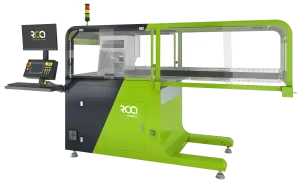
Speed is the ultimate productivity factor in industrial textile printing. Traditional standalone DTG (Direct-to-Garment) printers offer unparalleled flexibility in terms of color and photorealistic renderings, but they face a fundamental problem for large-scale production: they are simply too slow. An average DTG printer produces 30 to 40 shirts per hour at an acceptable resolution. For larger B2B orders, merchandising, and e-commerce fulfillment with tight deadlines, this volume is entirely insufficient.
The ROQ HYBRID drastically breaks this speed barrier, combining the best of both worlds: the speed and reliability of traditional screen printing with the boundless color brilliance and variable data of digital printing. With this integration, production speeds of up to 320 garments per hour are achievable. In this article, we dive deep into the technology, workflow, ROI, and best practices to realize this unprecedented speed in your print shop.
The Bottlenecks of Standalone DTG Printers
To understand how impressive 320 pieces per hour is, we must first analyze why traditional DTG printers get stuck at a fraction of that speed.
With a standalone DTG printer, the operator must go through the following sequential steps for each garment:
- Manual loading: The shirt must be carefully placed on the platen.
- Pre-treatment (often separate): For dark textiles, the shirt must first be pre-treated and dried separately, unless the machine has this integrated, which adds extra time per station.
- Printing the underbase: The white ink layer (underbase) is printed, which is time-consuming due to its thickness and opacity.
- Printing CMYK: Only after the white layer is laid down does the machine print the colors. This process can take 1.5 to 3 minutes per shirt, depending on the resolution.
- Unloading and post-treatment: The shirt is removed and manually run under a heat press or through a drying conveyor oven.
During the time the operator is loading and unloading the shirt, the print head is idle. This inefficient alternation of manual handling and machine time ensures that the net output remains heavily limited. The machine is not producing; it is waiting.
The Parallel Workflow of the ROQ Hybrid
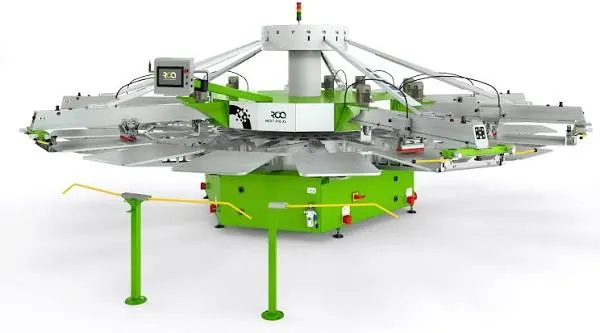
The ROQ Hybrid tackles this efficiency problem at its core by integrating the digital print module onto a rotary screen printing chassis (a carousel or an oval system). This transforms the workflow from a sequential, interrupted task into a continuous parallel process.
Station-by-Station Efficiency
Let’s look at a typical configuration on a ROQ oval or circular machine. Where standalone DTG tries to do everything in one position, the hybrid machine divides the process over multiple stations:
- Station 1: Loading: The operator focuses solely on loading shirts at lightning speed. While the machine indexes (rotates), a new platen is continuously available.
- Station 2: Screen Print White Underbase: Instead of slowly printing white digital ink, the underbase is placed in a fraction of a second via a traditional screen printing frame. This is not only immensely faster, but the ink costs for white screen printing ink (plastisol or water-based) are significantly lower than digital white ink.
- Station 3 & 4: Flash Curing and Pressing: The white ink is flash-cured in seconds by powerful flash units and potentially flat-pressed by an iron (smoothing) press for a perfectly smooth surface, crucial for a sharp digital print.
- Station 5: Digital Print (CMYK + RG): The pallets arrive at the ROQ Hybrid digital module. This module is equipped with industrial print heads (such as Fujifilm Dimatix or Ricoh Gen5/6) that print the full-color image in one smooth movement over the perfectly prepared white underbase. Because the print module doesn’t have to wait for loading/unloading, it is operating almost continuously.
- Station 6: Extra Screen Printing Effects (Optional): A huge advantage of the hybrid system is that you can add special effects via screen printing after the digital print, such as foil, flock, high-density, or puff inks.
- Final Station: Unloading: A second operator (or an automatic unloading system) removes the shirts and places them on the conveyor belt of the drying oven.
Because each station performs its specific task simultaneously, the entire system only has to wait for the slowest link. By optimizing industrial print heads and making indexing extremely smooth, the ROQ Hybrid achieves a cadence that results in a maximum of 320 pieces per hour.
Technological Deep Dive: Why the ROQ Hybrid Excels
The speed of 320 shirts per hour is not only achieved by running the process in parallel, but also by the robust hardware and smart software of the ROQ system.
Z-axis Control and Print Heads
The hybrid module features advanced Z-axis control. Textiles are not perfectly flat (seams, zippers, collars). The laser sensors measure the height of the fabric in milliseconds and automatically adjust the height of the print carriage. This prevents ‘head strikes’ (where textile hits and damages the expensive print heads) while keeping the distance as small as possible for maximum sharpness.
Ink Circulation Systems
Digital ink, especially in industrial volumes, requires constant agitation and conditioning. The ROQ Hybrid uses closed ink circulation systems with controlled temperature and negative pressure. This prevents nozzles from clogging and ensures a consistent drop size, even when the machine is running at maximum speed.
RIP Software and Data Processing
When printing 320 unique or photorealistic images per hour, the amount of data is massive. Powerful RIP software (Raster Image Processing) and lightning-fast fiber optic or gigabit networks are crucial. The data for the next shirt must already be in the print module’s buffer before the pallet arrives, so there is no network delay between the machine’s indexings.
Cost-Benefit Analysis and ROI (Return on Investment)
The transition to a hybrid system is a significant investment. However, due to the high production speed and lower consumable costs, the cost per printed shirt and the ROI drop dramatically compared to a fleet of standalone DTG printers.
Labor Costs per Shirt
Suppose you produce 300 shirts on a standalone DTG printer. At 30 shirts per hour, you need 10 hours of production time. With an hourly wage of €25 (including social charges), your total labor costs are €250. The labor cost per shirt then amounts to approximately €0.83.
With the ROQ Hybrid, you produce those same 300 shirts in less than one hour (with two operators for loading/unloading). Two man-hours cost €50. Your labor costs per shirt thus drop to around €0.16. This is a massive margin improvement.
Ink and Consumable Costs
Digital white ink for DTG is one of the most expensive consumables in our industry. By applying the white underbase via traditional screen printing, you replace expensive digital ink with very affordable white screen printing ink. The cost of the underbase can drop from €0.50 - €1.00 per shirt (digital) to just €0.05 - €0.10 per shirt (screen print). Furthermore, the opacity of a screen-printed white layer is superior on dark polyester and cotton blends, yielding a tighter and more vibrant CMYK digital print.
Depreciation and Floor Space
To match the output of one ROQ Hybrid (320/hour) with traditional DTGs, you would need about 8 to 10 standalone machines, including corresponding pre-treatment cabins and operators. This requires a gigantic floor space, massive climate control costs, and complex logistics on the factory floor. The ROQ Hybrid saves expensive square meters and centralizes the production process.
Best Practices for Maximum Uptime and Production Speed
Owning a ROQ Hybrid does not automatically mean you will run 320 shirts per hour non-stop. To consistently achieve this in practice, a well-oiled process around the machine is essential.
1. Prepress and File Preparation
Ensure files are optimally prepared by your prepress department. Use automatic color profiles (ICC) and ensure the separation for the screen print underbase aligns seamlessly with the digital data. Choke the white underbase slightly in prepress (about 1 or 2 pixels) so the CMYK colors overlap perfectly and no white edges are visible.
2. Ergonomics for Operators
The machine runs only as fast as the operators can load and unload. Optimize the workspace:
- Place crates or roll containers with textiles at the correct height.
- Use laser alignment systems (positioning lasers) at the loading station so the operator can see at a glance if the shirt is straight, without needing to hesitate or reposition.
- Rotate operators (e.g., switch from loading to unloading station every 2 hours) to minimize fatigue and errors.
3. Preventive Maintenance and Climate Control
Digital print heads are sensitive to dryness and dust. A production room with the right humidity (ideally between 45% and 60%) and controlled temperature (20-25°C) is not optional, but a strict requirement. Execute daily cleaning routines strictly: cleaning the capping station, wiper blades, and checking the nozzle tests at the start of each shift. An optimally maintained machine shows hardly any unexpected downtime.
4. Streamlined Logistics and Drying
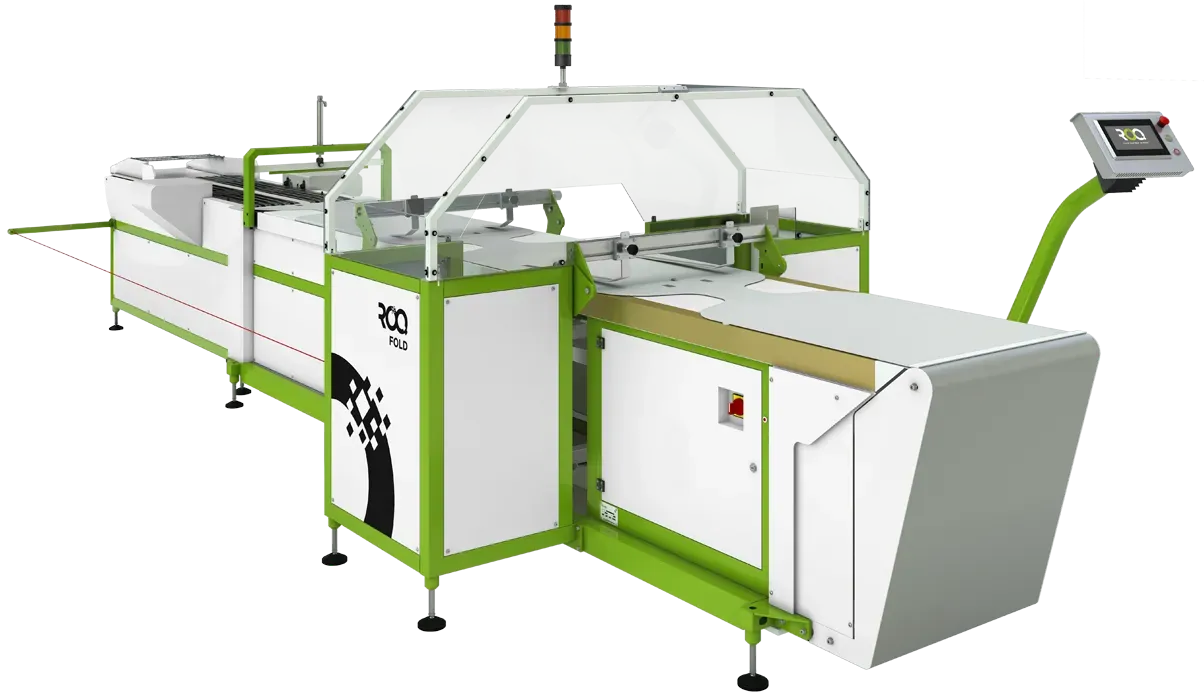
If 320 shirts per hour come off the belt, your drying tunnel must be able to handle this capacity effortlessly without failing to cure the ink completely (which leads to ink washing out) or scorching textiles due to bunching on the belt. Ensure the belt speed and the heat capacity of the tunnel are matched to this extreme throughput. Ensure sufficient staff at the end of the tunnel for quality control (QC) and packaging.
Flexibility: From Mass Production to Mass Customization
A common misconception is that high production speeds are only for large, identical print runs (mass production). While the white screen print underbase is often a uniform solid or silhouette for the entire run, the digital print head offers the possibility of “Mass Customization” at high speed.
This means that on a basic white solid (the screen print silhouette), you can place a completely different digital full-color print for each shirt, varying in color, numbering, or name. This is particularly interesting for sportswear, personalized merchandise, or web-to-print e-commerce integrations. You achieve the speed of screen printing with the flexibility of variable digital data.
Conclusion
The transition to a hybrid printing workflow is the most logical step for medium to large textile printing companies struggling with the limitations of standalone DTG and the high setup costs of traditional multi-color screen printing for complex designs. With speeds up to 320 garments per hour, the ROQ Hybrid allows you to deliver larger orders faster, more profitably, and with a superior and noticeably thinner print quality.
By minimizing labor costs, eliminating expensive digital white ink, and utilizing your floor space efficiently, the hybrid revolution is not just a technological upgrade—it is a transformation of your business model. Embrace this speed, optimize your processes around the machine, and you are ready to dominate the strictest deadlines in the textile industry.
Want to learn more about ROQ Hybrid solutions?
Explore the technical specifications of the ROQ HYBRID, ROQ OVAL EVOLUTION, and ROQ NEXT or contact the specialists at Dimix.Screen for tailored advice or a live demonstration.
Featured & related machines
Discover the industrial systems and solutions related to this topic:
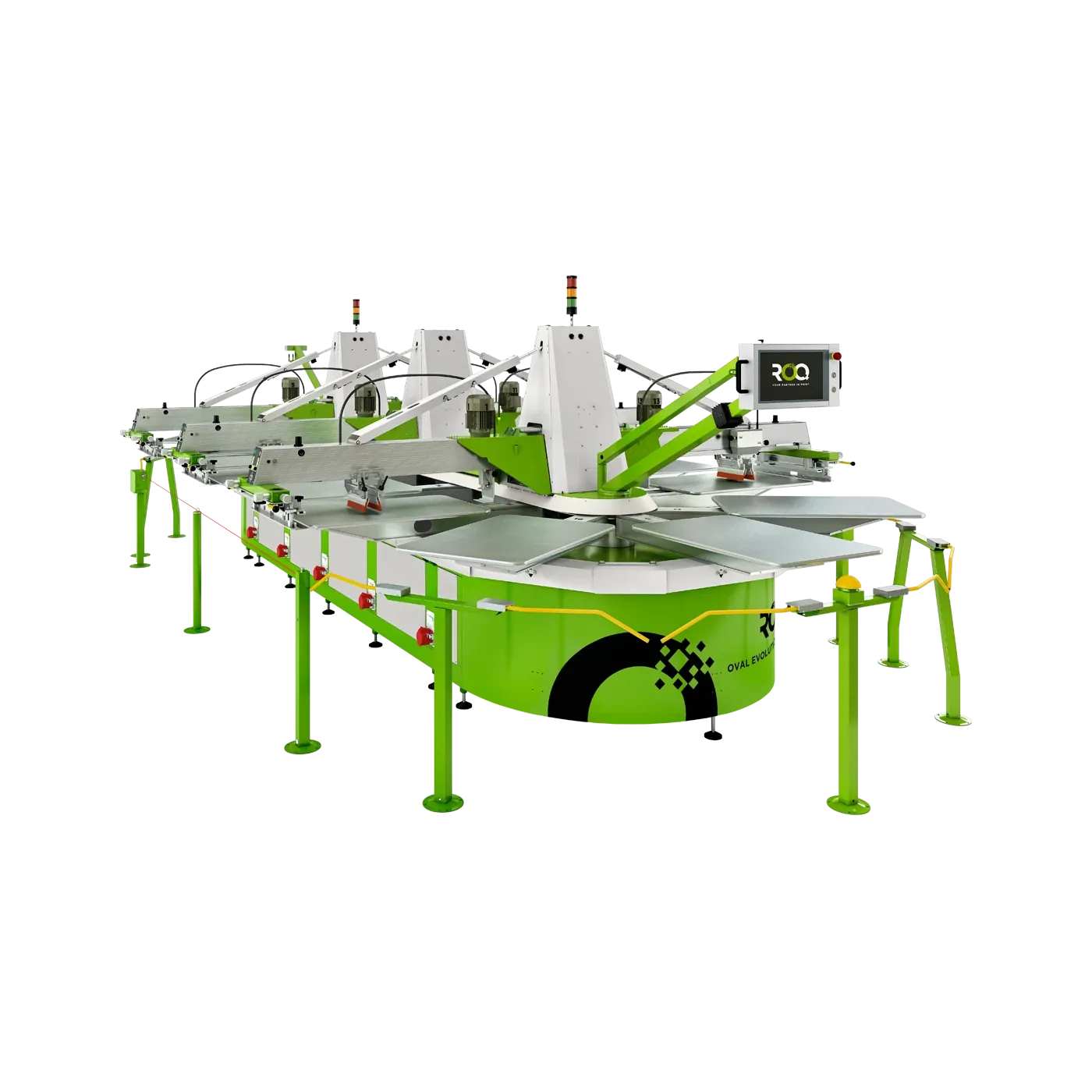
ROQ OVAL EVOLUTION
Modular oval screen printing press for unlimited colors, expandability, and simultaneous print jobs.
ROQ NEXT
Modern carousel press featuring independent head lift and robust dual-chain drive indexing.
ROQ HYBRID
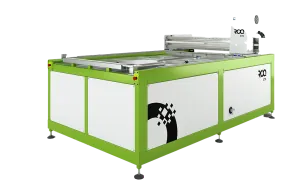
Industrial digital hybrid printing unit with Ricoh Gen5 printheads and active ink recirculation for seamless integration on ROQ screen printing presses.