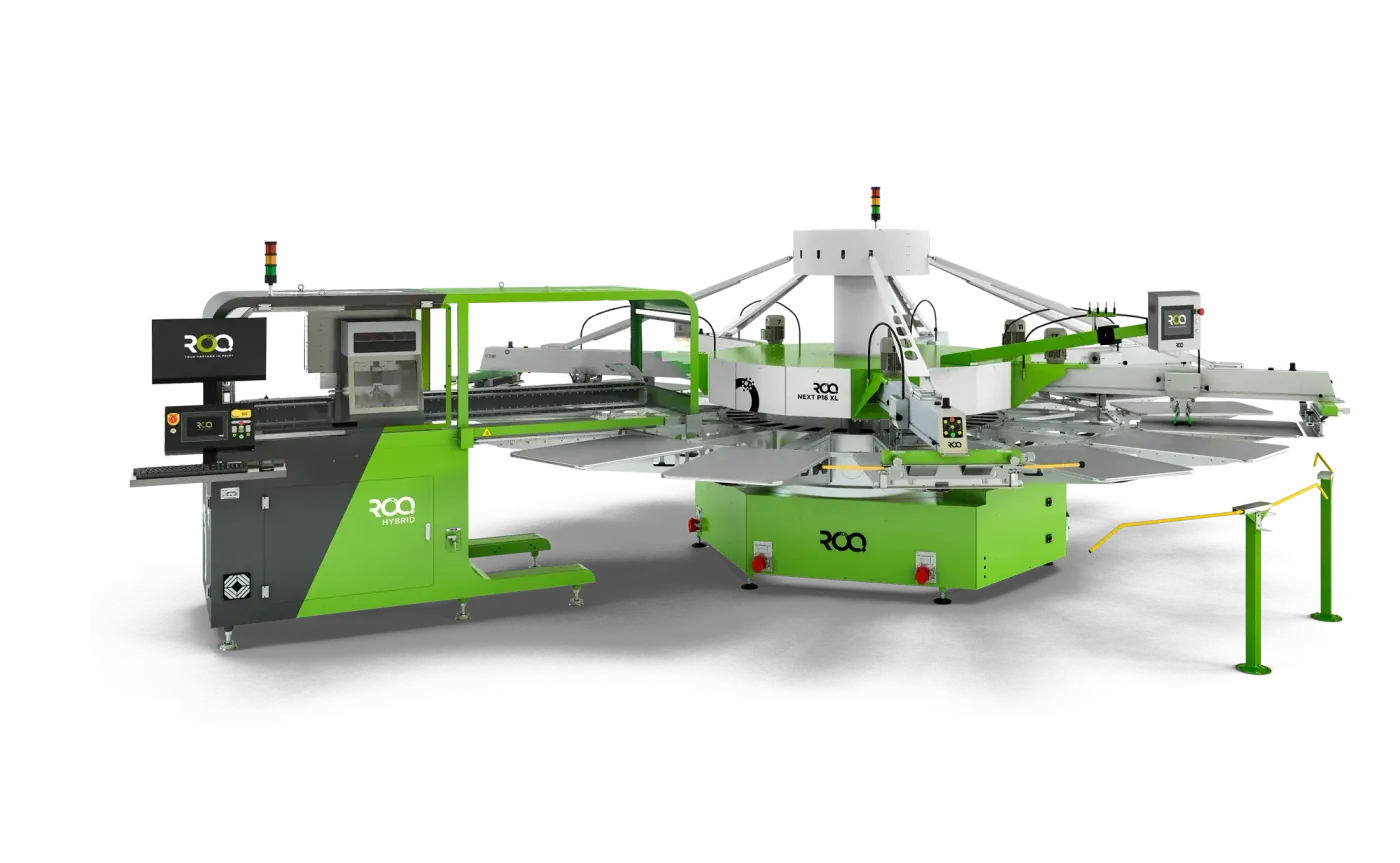
The evolution of textile printing has accelerated rapidly with the rise of hybrid printing systems. For professional screen printers and garment decorators making the leap into digital, choosing the right machinery is crucial. The reliability, uptime, and ultimate profitability of a digital hybrid print system stand or fall on two core components: the quality of the printheads and the efficiency of the ink management system. In this comprehensive article, we dive deep into the technology behind the ROQ HYBRID, specifically focusing on the industrial Ricoh Gen5 piezoelectric printheads and the advanced active ink recirculation system.
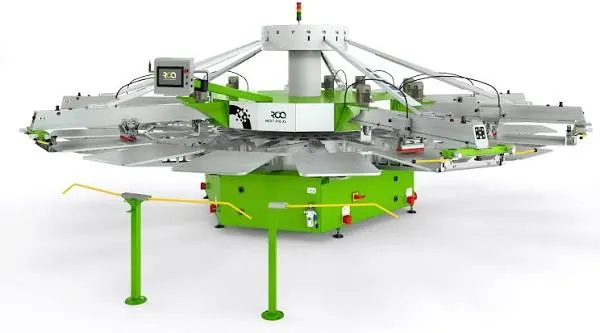
The Transformation to Hybrid Production
Hybrid printing combines the absolute best of both worlds: the unparalleled speed and cost-effectiveness of traditional screen printing for white underbases and special effects, coupled with the boundless color brilliance and variability of digital printing (Direct-to-Garment). However, the digital component demands a level of precision and stability that traditional DTG machines often lack, especially in high-volume industrial production environments. This is precisely where the ROQ Hybrid sets itself apart. Designed from the ground up for the most demanding production floors, this machine utilizes robust, industry-proven technologies to minimize downtime and maximize output.
Ricoh Gen5 Piezoelectric Technology: The Engine of Precision
Choosing the right printhead is the single most important decision when engineering a digital printing system. ROQ has deliberately selected the highly acclaimed Ricoh Gen5 printhead, an industrial standard designed specifically for continuous, 24/7 use in the most challenging manufacturing environments.
Piezoelectric vs. Thermal Unlike thermal printheads (which are often found in consumer printers or entry-level DTG systems), which heat the ink until a bubble forms to force the ink out of the nozzle, piezoelectric printheads utilize rapid electrical impulses. When an electrical voltage is applied to the piezo crystal inside the printhead, the crystal deforms instantaneously. This microscopic mechanical deformation creates a pressure wave that ejects an exact amount of ink through the nozzle. This principle, known as ‘drop-on-demand’, generates absolutely no heat. This is absolutely critical for textile inks, as heat can alter the chemical composition of the ink within the printhead, leading to premature curing, severe blockages, and eventual failure.
Variable Drop Size for Unparalleled Quality One of the most powerful features of the Ricoh Gen5 is its ability to produce variable drop sizes, ranging from 7 to 21 picoliters (pl). While this might sound like an obscure technical specification, it has an immense, visible impact on the final print quality:
- Small drops (7 pl): Utilized for printing razor-sharp details, crisp typography, smooth color gradients, and photorealistic skin tones without any visible graininess.
- Medium to large drops (14-21 pl): Deployed to fill large solid areas quickly and efficiently with deep, even color coverage and maximum visual density.
By dynamically combining these drop sizes on the fly, the ROQ Hybrid achieves a perfect, harmonious balance between raw production speed and breathtaking image quality, rendering a resolution that effortlessly meets the highest global fashion and retail standards.
Durability in Industrial Environments The Ricoh Gen5 is constructed from stainless steel and other premium-grade materials, making it highly resistant to the aggressive chemicals and heavy pigments utilized in textile inks. While lighter, consumer-grade printheads often require complete replacement after just a few months of intensive use, the Gen5 heads within the ROQ Hybrid offer a substantially longer lifespan. This significantly lowers the Total Cost of Ownership (TCO) and prevents highly disruptive, unnecessary production stoppages.
The White Ink Dilemma: The Battle Against Pigment Settling
To truly understand the sheer brilliance of the ROQ ink recirculation system, we must first address the biggest headache in digital textile printing: white ink.
White digital ink for textiles contains heavy pigments, primarily titanium dioxide (TiO2), to achieve the necessary opacity and brightness on dark garments. While this specific chemical composition is perfect for achieving solid coverage, it is an absolute nightmare for the internal mechanics of a printer. These heavy pigment particles are highly susceptible to gravity. When the ink remains stationary for even a short period within the ink lines, the sub-tanks, or the printhead itself, the pigments inevitably begin to settle—much like sand sinking to the bottom of a glass of water.
This settling, also known as precipitation, is the ultimate arch-nemesis of any DTG operator. It is the primary root cause of:
- Clogged nozzles: The microscopic openings of the printhead become completely blocked, leading to ‘banding’ (visible horizontal stripes in the print) or the total loss of specific colors.
- Color shifts: When the pigment settles, the top portion of the ink becomes watery and diluted, resulting in a weak, transparent white layer and dull, muted colors over it.
- Catastrophic printhead damage: In the worst-case scenario, cured pigment can damage the printhead beyond repair, resulting in thousands of dollars in replacement costs and prolonged machine downtime.
In traditional systems, operators attempt to solve this by running aggressive, highly frequent cleaning cycles (purging), where expensive, unused ink is literally flushed straight into the waste tank just to keep the internal lines ‘clean’. This practice is both ecologically irresponsible and economically devastating, driving up operational costs significantly.
ROQ’s Active Ink Recirculation System: Continuous Motion
To eliminate this massive challenge once and for all, ROQ has equipped the Hybrid with a state-of-the-art, active ink recirculation system that operates non-stop.
How it works: The sophisticated ROQ system ensures that the ink (particularly the critical white ink, but equally the CMYK+RG process colors) is constantly in a state of motion. The ink is continuously pumped through a tightly sealed, closed circuit: straight from the main bulk tanks, through industrial-grade degassing filters, via the supply lines, straight through the internal fluid channels of the Ricoh Gen5 printhead, and finally back to the start.
Crucially, this invigorating circulation does absolutely not stop when the operator hits the pause button, or when the machine is put into standby mode at the end of a demanding shift or workweek. Throughout the night, over long weekends, and during company holidays, the advanced system continues to subtly pulse and agitate the ink. Consequently, the heavy titanium dioxide simply never gets the chance to settle and solidify.
Degassing and Temperature Control Beyond preventing pigment settling, the recirculation system plays an equally vital role in temperature management and ink degassing. Microscopic air bubbles trapped within the ink can disrupt the piezoelectric shockwave inside the printhead, leading to missed or crookedly fired drops (known as misfiring). The continuous flow system passes the ink through specialized degassing filters that actively extract these tiny air bubbles. Furthermore, the rapid, steady circulation ensures that the ink is maintained evenly at the optimal, pre-programmed operating temperature, completely independent of the fluctuating ambient temperature in the print shop. This guarantees a constant, ideal viscosity, and thereby a 100% consistent print quality from the very first shirt to the last.
ROI, Profitability, and Operational Advantages
The strategic implementation of industrial Ricoh Gen5 heads combined with this advanced active recirculation is far from an optional luxury; it is a hard, data-driven business decision with an incredibly rapid Return On Investment (ROI). What exactly does this mean in the demanding, daily reality of your print shop or garment decoration business?
- Drastic Reduction in Ink Waste and Costs: Because the ROQ system does not have to rely on massive manual ‘purges’ and ink-guzzling automated cleaning cycles to keep the heads functional, you can save up to 30% on your structural ink consumption compared to traditional DTG systems on the market. Every drop of expensive ink that avoids the waste tank contributes one-to-one, directly to your bottom-line profit margin.
- Immediate Start-up, Zero Wait Times, and Higher Uptime: Traditional systems all too often require 30 to 45 minutes of frustrating maintenance, manual agitation, and countless test prints before the first acceptable, sellable print of the day can actually be produced. With the intuitive ROQ Hybrid, the operator simply walks up to the machine in the morning, wakes it from standby with the push of a button, and the system is literally producing high-quality garments within minutes. This saved daily production time effortlessly adds up to hundreds of extra billable production hours per calendar year.
- Drastically Extended Printhead Lifespan: Printheads will always remain the most expensive consumables in the world of digital printing. By proactively preventing stubborn clogs and continuously guaranteeing the optimal chemical stability of the ink within the head, the robust Ricoh Gen5 heads in a ROQ Hybrid last significantly, measurably longer. You minimize the highly stressful risk of catastrophic failure during peak moments and avoid the associated exorbitant service calls.
- Assured, Consistent Quality Over Massive Runs: Thanks to the absolutely stable temperature and perfect viscosity, the five-thousandth T-shirt in your production run looks exactly identical to the very first test sample. This completely eliminates costly production errors (rejects) and guarantees one hundred percent customer satisfaction for the most demanding international fashion brands and corporate clients.
Crucial Best Practices for the Operator
While the brilliant technology of the ROQ Hybrid automates a very significant portion of daily maintenance, dedicated, proactive machine operation remains crucial for truly optimal and trouble-free performance. Here are some indispensable best practices for ambitious textile and screen printers:
- Climate Control in the Production Facility: Always ensure a stable ambient temperature (ideally kept constant between 20-25°C or 68-77°F) and a meticulously controlled humidity level (between 45-60%). Overly dry air in the facility can irrevocably dry out the ink on the surface of the nozzle plate, and this happens despite the internal circulation within the heads.
- Regular, Disciplined Nozzle Checks: As a standard operating procedure, perform a quick test print/nozzle check daily right before large production begins. This simple step helps you catch any minor deviations in the firing pattern early on and resolve them instantly.
- Keep Wiping Stations and Capping Spotless: The ink recirculation system successfully keeps the internal channels perfectly clean, but the vulnerable exterior of the nozzle plate (where dust, lint, and microscopic textile fibers can accumulate abundantly throughout the day) must be efficiently cleaned mechanically by the machine’s built-in wipers. Dedicate yourself to keeping these wipers and capping stations constantly in absolute pristine condition, and strictly follow the weekly cleaning procedures and maintenance schedules prescribed by ROQ.
- Perfect, High-Quality Screen Print Underbases: Since you are making the transition to hybrid printing, your traditional screen print station handles laying down the white base layer. A perfectly smooth, superbly flashed (dried) screen print underbase maximizes the final sharpness, detail rendering, and brilliant color saturation of the CMYK inks laid down over it by the Ricoh Gen5 printheads.
Conclusion: The Absolute Industrial Standard for Hybrid Production
The global shift in the industry toward hybrid textile printing is today much more than just a passing trend; it is outright the definitive future of high-volume, premium-quality apparel decoration on a massive scale. Through the seamless integration of proven, robust screen printing techniques with the unprecedented, scalable versatility of the ROQ Hybrid—armed with the indestructible Ricoh Gen5 printheads and a tireless, ingenious ink recirculation system—innovative print shops are immediately positioning themselves for unprecedented, sustainable growth. These meticulously designed, mature technologies resolutely eliminate the largest, most frustrating traditional pain points of conventional digital printing, offering a complete production platform that is insanely reliable, highly predictable, and exceptionally profitable. For the forward-thinking, modern screen printer urgently looking to expand capacity while simultaneously maximizing creative flexibility to respond to the market, this superior industrial duo offers the ultimate assurance for many, many years of absolute peak performance.
Want to learn more about the ROQ HYBRID and screen printing solutions?
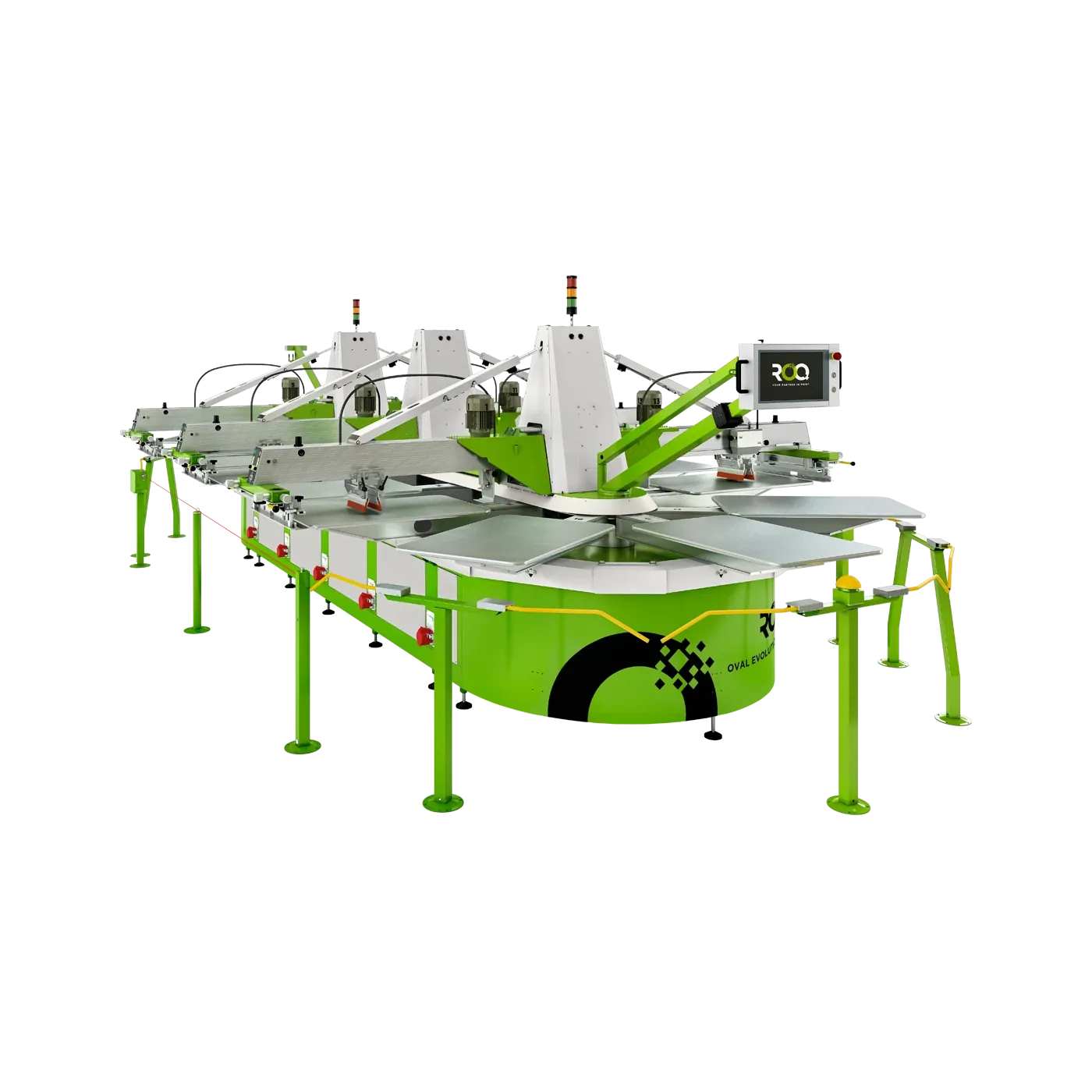
Explore the technical specifications of the ROQ HYBRID, ROQ OVAL EVOLUTION, ROQ CTS, and ROQ PRU or contact the specialists at Dimix.Screen for tailored advice or a live demonstration.
Featured & related machines
Discover the industrial systems and solutions related to this topic:
ROQ HYBRID
Industrial digital hybrid printing unit with Ricoh Gen5 printheads and active ink recirculation for seamless integration on ROQ screen printing presses.
ROQ CTS
Direct-to-screen high-resolution UV-LED exposure unit for film-free prepress workflows.
ROQ PRU
Positive Pattern Registration Unit reducing press setup and make-ready times by up to 80%.